
August 10, 2026
Why More Manufacturers Are Choosing This CNC Configuration for Modern Production
In many manufacturing plants, the biggest challenge is not finding a CNC machine. The real challenge is choosing the right machining center that can deliver stable accuracy, reasonable productivity, and long-term operating value.
A machine that looks attractive on a specification sheet may not always perform well in daily production. Factors such as machine rigidity, spindle capability, working area, control system, and supplier support often decide whether the investment creates real value.
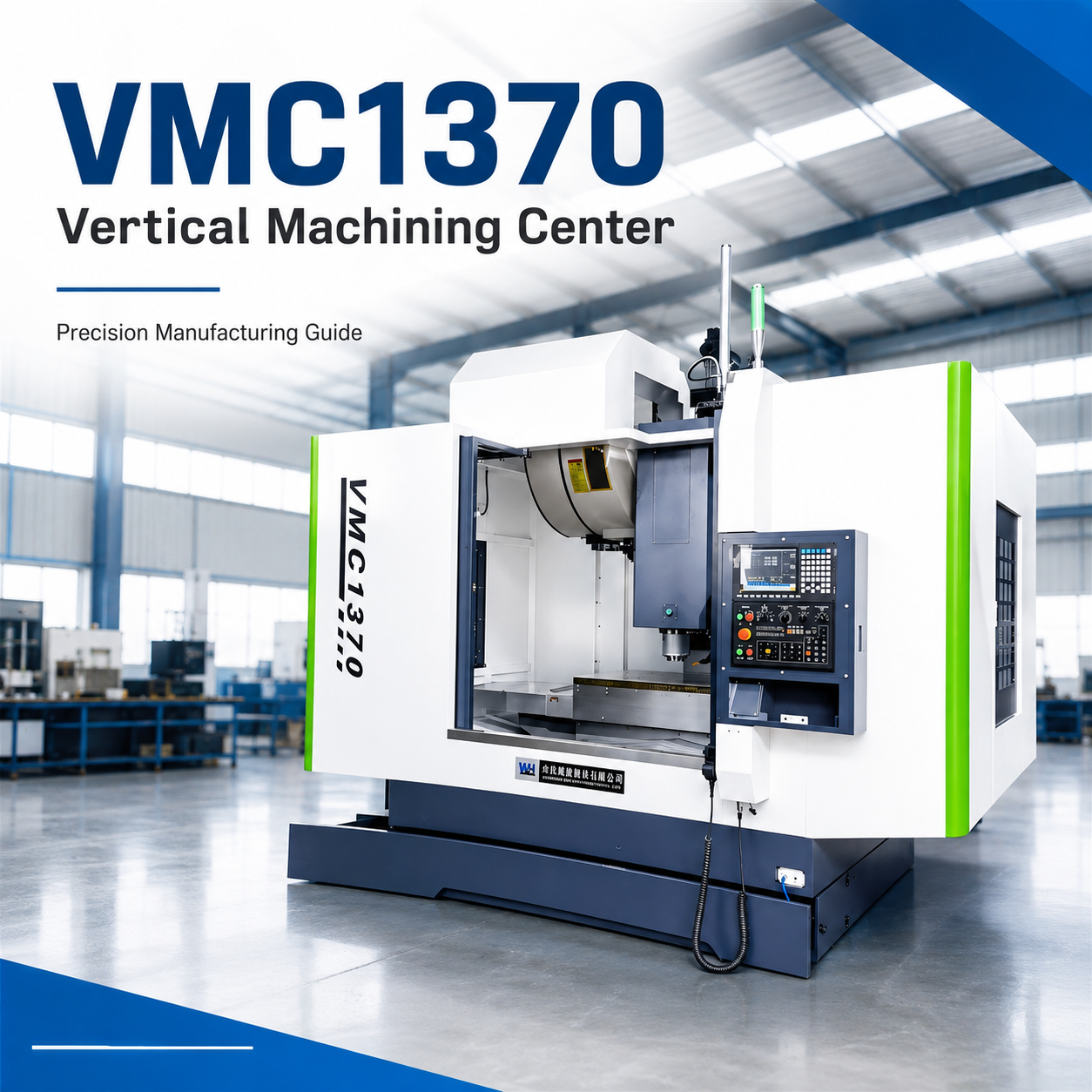
For manufacturers producing molds, automotive components, precision mechanical parts, and industrial equipment, the VMC1370 Vertical Machining Center has become a practical solution because it offers a balanced combination of machining capacity and flexibility.
With a working range of 1300 × 700 × 700 mm, BT40 spindle configuration, and high-rigidity structure design, the VMC1370 is suitable for companies that need reliable performance without moving into oversized machining equipment.
According to global market research, demand for vertical machining centers continues to grow as manufacturers increase automation levels and require higher machining consistency. The global CNC machining market is being driven by industries such as automotive, aerospace, medical equipment, and precision engineering, where accuracy and repeatability are becoming increasingly important.
So, what makes a VMC1370 Vertical Machining Center a suitable choice for industrial buyers? Let’s look at the details from a practical manufacturing perspective.
Table of Contents
· What Is a VMC1370 Vertical Machining Center?
· How Does a Vertical Machining Center Work?
· Why Machine Structure and Spindle Performance Matter
· Key Specifications Buyers Should Evaluate Before Purchasing
· Material and Application Comparison
· Quality Control Standards Behind Reliable CNC Machines
· Real Manufacturing Application Case
· Frequently Asked Questions
· Final Buying Considerations
What Is a VMC1370 Vertical Machining Center?
A VMC1370 Vertical Machining Center is a CNC machine tool designed for precision milling, drilling, tapping, and multi-process machining operations.
Unlike traditional milling machines that require more manual adjustment, a vertical machining center integrates CNC control technology to automate tool movement and machining processes.
The "vertical" design refers to the spindle orientation. The cutting tool moves vertically toward the workpiece, allowing manufacturers to efficiently process a wide range of metal components.
The VMC1370 model name also represents its machining capacity:
· 1300 mm X-axis travel
· 700 mm Y-axis travel
· 700 mm Z-axis travel
This working envelope makes it suitable for medium-to-large components while maintaining a compact factory footprint.
For many machine shops, this configuration fills the gap between smaller VMC machines used for simple parts and larger machining centers designed for heavy industrial applications.
How Does a Vertical Machining Center Work?
The basic working principle of a vertical machining center is relatively straightforward.
The workpiece is fixed on the machine table, while the spindle rotates cutting tools at high speed. The CNC controller coordinates movement along multiple axes according to programmed machining instructions.
A typical machining process includes:
1. CAD/CAM Programming
Engineers create a digital model of the component and generate machining paths through CAD/CAM software.
2. Workpiece Setup
Operators secure the material onto the machine table and install suitable cutting tools.
3. CNC Processing
The controller guides axis movement, spindle rotation, and cutting operations automatically.
4. Quality Inspection
Finished parts are measured to confirm dimensional accuracy and surface quality.
The advantage of this process is consistency. Once the program is optimized, the machine can repeatedly produce identical components with reduced human error.
Why Machine Structure Matters More Than Many Buyers Expect
When purchasing CNC equipment, many buyers focus first on spindle speed or controller brands.
However, experienced manufacturers usually look at something more fundamental:
Can the machine maintain stability after thousands of hours of operation?
Machine structure directly affects:
· machining accuracy
· vibration control
· tool life
· surface finish
· long-term reliability
A strong vertical machining center normally uses high-quality cast iron structures because cast iron provides excellent vibration absorption.
For example, the VMC1370 design focuses on structural rigidity through:
· heavy-duty cast iron components
· optimized machine body design
· aging treatment to improve stability
· precision machining of key structural parts
These factors help reduce deformation and maintain machining accuracy during continuous production.
Key Specifications Buyers Should Evaluate Before Purchasing
A CNC machine should not be selected only by comparing prices.
Different factories have different production requirements. A mold manufacturer and an automotive component supplier may need completely different machine characteristics.
Below are several important factors international buyers should consider.
Specification Factor | Why It Matters | Impact on Production |
Working Travel | Determines maximum component size | Avoids size limitations |
Spindle Speed | Influences cutting efficiency | Affects productivity |
Machine Rigidity | Controls vibration during cutting | Improves accuracy and tool life |
CNC Controller | Controls operation efficiency | Reduces programming difficulty |
Inspection Process | Ensures machine reliability | Reduces production risks |
Working Area: Finding the Right Balance
The VMC1370 provides a 1300 × 700 × 700 mm machining range, which is suitable for many industrial applications.
Typical applications include:
· mold components
· mechanical plates
· machine parts
· automotive fixtures
· precision brackets
A larger working area does not always mean better performance.
If the machine is oversized for the application, buyers may pay more for unused capacity. On the other hand, choosing a machine that is too small can limit future production expansion.
The right approach is matching machine capability with actual manufacturing needs.
Spindle Performance and BT40 Tooling System
The spindle is one of the most important components of any CNC machining center.
The VMC1370 uses a BT40 spindle configuration, which is widely adopted in industrial machining applications.
BT40 tooling offers advantages such as:
· good rigidity
· broad tool availability
· suitability for various cutting operations
· compatibility with common machining processes
With an 8,000 rpm spindle speed configuration, the machine can handle many general precision machining tasks, while higher-speed options are available for applications requiring faster material removal.
Quality Control Behind a Reliable VMC1370 Vertical Machining Center
For international buyers, purchasing a CNC machine is not only about technical specifications. A machining center is a long-term production investment, and the manufacturing process behind the machine often determines its real service value.
A supplier may provide similar numbers on a specification sheet, but the difference usually appears after months or years of operation.
A reliable VMC1370 Vertical Machining Center should go through strict manufacturing and inspection procedures before shipment.
Key quality control steps typically include:
1. Casting Quality and Structural Stability
The machine base is the foundation of machining accuracy.
High-quality cast iron is commonly used in CNC machine tools because it provides:
· strong vibration absorption
· good structural stability
· resistance to deformation during continuous machining
For heavy cutting operations, vibration control is especially important. Excessive vibration can lead to:
· poor surface finish
· faster tool wear
· reduced machining accuracy
This is why professional CNC manufacturers usually focus heavily on casting quality and stress-relief processes.
2. Precision Machining of Key Components
After casting, critical machine components require precision machining.
Important areas include:
· guideway surfaces
· spindle mounting areas
· machine table surfaces
· connection points between structural components
Small deviations in these areas can affect the final machining accuracy.
For export-oriented CNC manufacturers, precision inspection before assembly helps ensure that every machine meets expected geometric accuracy standards.
3. Final Assembly and Machine Testing
Before delivery, a complete vertical machining center normally requires:
· axis movement testing
· spindle operation testing
· positioning accuracy inspection
· repeated machining verification
A machine that performs well during testing is more likely to maintain stable operation after installation at the customer's factory.
For buyers importing CNC equipment internationally, asking about inspection procedures is often more valuable than simply comparing machine prices.
Material and Application Comparison: Where Does VMC1370 Fit Best?
Different industries have different machining requirements. The same machine configuration may perform differently depending on the material and production environment.
Application | Common Materials | Required Machine Capability | VMC1370 Suitability |
Mold Manufacturing | Tool steel, aluminum alloy | High rigidity and accuracy | Excellent |
Automotive Components | Steel, aluminum, cast iron | Stable continuous machining | Excellent |
Mechanical Parts | Carbon steel, alloy steel | Flexible machining capability | Suitable |
Aluminum Parts | Aluminum alloy | Higher spindle speed | Suitable with optimized tooling |
Prototypes | Various metals | Quick setup and flexibility | Suitable |
The key point is that machine selection should be based on production requirements rather than simply choosing the machine with the highest specifications.
Common Purchasing Mistakes When Buying a CNC Vertical Machining Center
After working with industrial equipment buyers, one common problem appears repeatedly:
Many companies focus too much on the initial purchase price and overlook the total operating cost.
A lower-priced machine may create additional costs through:
· frequent maintenance
· unstable accuracy
· longer debugging time
· higher tool consumption
· production interruptions
Before purchasing a CNC vertical machining center, buyers should evaluate several practical factors.
1. Check the Manufacturer’s Production Capability
A CNC machine supplier should not only be a trading company.
Buyers should check:
· factory production environment
· manufacturing capability
· quality inspection process
· export experience
A manufacturer with complete production capability usually has better control over machine quality and delivery time.
2. Evaluate Technical Support
For overseas buyers, after-sales support is important.
Questions worth asking include:
· Does the supplier provide installation guidance?
· Are spare parts available?
· Can engineers provide remote technical support?
· Is documentation available in English?
A good machine is valuable, but a supplier that can support the machine throughout its lifecycle creates more long-term value.
3. Consider Future Production Expansion
Many manufacturers purchase equipment based only on current orders.
However, production requirements often change.
A machine with suitable working capacity, flexible tooling options, and reliable performance can support future business growth without immediate replacement.
Real Manufacturing Application Case: Vertical Machining Centers in Automotive Component Production
The automotive industry is one of the largest users of CNC machining technology.
According to the International Organization of Motor Vehicle Manufacturers (OICA), global vehicle production reached more than 93 million units in 2023, creating continuous demand for precision-machined components.
Automotive suppliers commonly produce:
· engine components
· transmission parts
· fixtures
· aluminum housings
· structural components
A typical automotive component supplier producing aluminum and steel parts requires a machining center that can balance:
· repeatability
· production efficiency
· tooling flexibility
· surface quality
In this type of application, a VMC1370-class vertical machining center provides advantages because the machine size supports medium-sized components while maintaining efficient operation.
For example, when machining aluminum housings or mechanical fixtures, manufacturers can use:
· high-speed cutting tools for productivity
· stable workholding systems
· optimized CNC programs for repeat production
The result is not simply faster machining, but more predictable manufacturing performance.
This is why vertical machining centers remain widely used across automotive suppliers, industrial equipment manufacturers, and precision engineering companies worldwide.
Frequently Asked Questions About VMC1370 Vertical Machining Center
Q1: What industries are suitable for a VMC1370 Vertical Machining Center?
A VMC1370 is commonly used in industries such as automotive components, mold manufacturing, machinery parts, industrial equipment, and precision engineering.
Its working area and spindle configuration make it suitable for medium-sized metal components requiring stable CNC machining.
Q2: Why is machine rigidity important for CNC machining?
Machine rigidity directly affects machining stability.
A rigid machine structure reduces vibration during cutting, which helps improve:
· surface finish
· dimensional accuracy
· tool lifespan
For manufacturers running continuous production, structural stability is often more important than maximum spindle speed.
Q3: Is BT40 spindle suitable for industrial production?
Yes.
BT40 is one of the commonly used tooling systems for general industrial machining.
It provides a good balance between:
· tooling availability
· rigidity
· machining flexibility
It is suitable for many milling, drilling, and tapping applications.
Q4: What should buyers check before ordering a CNC machining center?
International buyers should review:
· machine specifications
· supplier manufacturing capability
· inspection process
· technical support
· spare parts availability
A successful purchase depends not only on the machine itself but also on the supplier’s ability to support long-term operation.
Final Thoughts: Choosing the Right VMC1370 Vertical Machining Center for Long-Term Production
Choosing a CNC machining center is not simply a comparison of specifications.
The real question is whether the machine can deliver stable performance after installation, during daily production, and throughout years of operation.
The VMC1370 Vertical Machining Center offers a practical balance between machining capacity, rigidity, and production flexibility. With its 1300 × 700 × 700 mm working range, BT40 spindle configuration, and industrial application advantages, it fits many manufacturers looking to improve machining efficiency.
For companies evaluating CNC equipment investment, reviewing machine structure, quality control processes, and supplier experience can help avoid costly purchasing mistakes.
If you are comparing machining solutions for your next production project, requesting detailed specifications, machining samples, or technical recommendations from an experienced CNC manufacturer can make the selection process much easier.